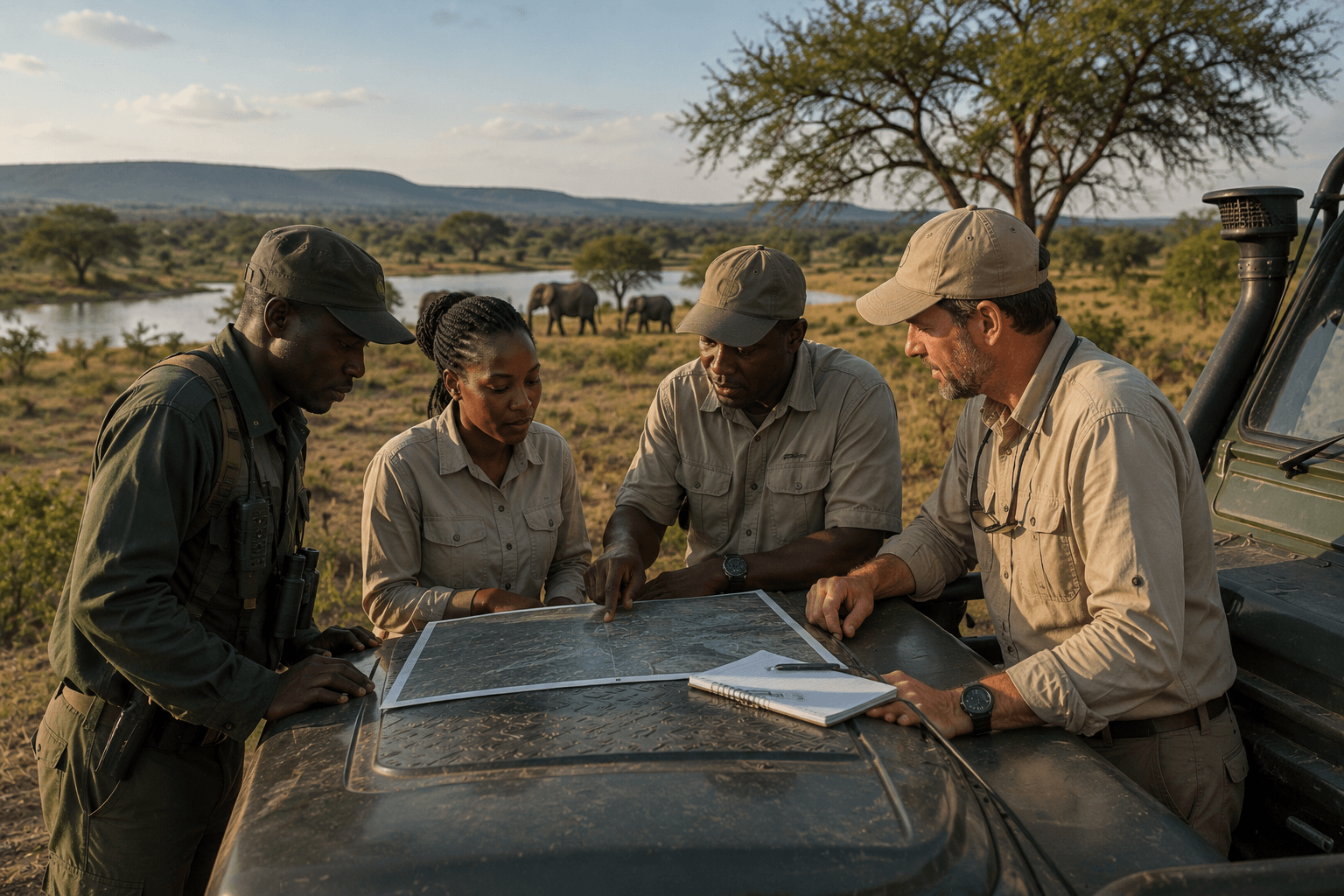
Across Africa, protected areas are under growing pressure. National parks, game reserves, wetlands and wildlife landscapes are expected to protect biodiversity, support tourism, serve communities, store carbon and preserve national heritage. Yet many operate with limited budgets, weak infrastructure, thin staffing and rising threats from poaching, encroachment, illegal grazing and human-wildlife conflict.
This gap between legal protection and practical management has pushed many African countries to consider new conservation models. One of the most important is the Collaborative Management Partnership, commonly known as a CMP.
What Are Collaborative Management Partnerships?
Collaborative Management Partnerships are long-term arrangements between government and a specialised conservation partner for the management of a protected area.
Under this model, the state remains the owner, regulator and final public authority. The conservation partner supports agreed functions such as financing, daily operations, ranger systems, infrastructure, tourism development, ecological monitoring, fundraising and community engagement.
Properly designed, a CMP is not a transfer of sovereignty. It is a practical governance tool that helps government strengthen protected-area management while retaining public authority over national natural resources.
Why Africa’s Protected Areas Need Stronger Management
Conservation does not succeed through policy statements alone. It requires professional management, reliable funding and long-term planning.
Wildlife populations recover slowly. Tourism markets take time to build. Communities need to see real benefits. Rangers need training, equipment, welfare, communication systems and lawful enforcement structures. Roads, ranger posts, water points, visitor facilities and monitoring systems all require sustained investment.
Short donor projects can help, but they rarely rebuild an entire protected area. CMPs are different because they usually operate over longer periods, often 15 to 20 years. This allows partners to plan seriously, invest patiently and measure results over time.
At their best, these partnerships bring discipline to conservation management. They introduce clear budgets, governance structures, conservation targets, security plans, tourism strategies, community programmes and reporting systems.
The Funding Question
Protected areas are public assets, but many are seriously underfunded. Governments expect them to protect wildlife, attract tourists, support communities, manage conflict and generate national value. The available funding often falls far below the scale of the task.
Collaborative Management Partnerships can help close this gap. They can attract donor funding, philanthropy, tourism investment and new forms of conservation finance. They can also give funders greater confidence that resources will be managed professionally over the long term.
But money also raises sensitive questions. Who collects revenue? Who retains it? How much is reinvested in the protected area? How much goes to central government? How much reaches neighbouring communities? Who audits the funds? Who approves tourism concessions? What happens to revenue from carbon, biodiversity credits or ecosystem services?
These are not technical details. They are questions of legitimacy.
Communities living near protected areas often carry the real costs of conservation, including crop damage, livestock losses, restricted access and safety risks. If conservation generates money but local people see little benefit, public trust will erode.
A strong CMP must therefore include clear rules on revenue, auditing, reinvestment and benefit-sharing.
Balancing Sovereignty and Operational Autonomy
One of the main concerns around CMPs is sovereignty. Protected areas are part of national territory. They are linked to land rights, security, tourism, culture, local government, climate finance and national development.
This concern should be taken seriously. A conservation partner should not become a substitute government inside a protected area. The state must remain the owner, regulator and final authority. The partner’s role must be contractual, transparent, limited by law and subject to oversight.
At the same time, the operator must have enough room to manage effectively. A CMP will fail if every procurement decision, patrol plan, staffing matter or infrastructure project is slowed by unnecessary bureaucracy or political interference.
The balance is simple but important: government should retain control over major policy decisions, legal status, enforcement powers, revenue frameworks, long-term concessions and community obligations. The operator should manage day-to-day functions professionally within that legal framework.
Sovereignty is not protected by frustrating management. It is protected by clear legal boundaries, public accountability, transparent reporting and the state’s continuing power to regulate, review and intervene where necessary.
Community Benefits Must Be Real
No conservation partnership will succeed if communities are treated as an afterthought.
Many protected areas have difficult histories involving displacement, restricted access, human-wildlife conflict and uneven benefit-sharing. Local communities often carry the daily burden of conservation while national and international actors enjoy the wider benefits.
A credible CMP must go beyond consultation meetings. It should create real channels for participation, employment, local procurement, enterprise development, grievance handling and benefit-sharing.
Communities need to see practical value: jobs, tourism opportunities, schools, health services, water, roads, fast response to human-wildlife conflict and fair treatment by enforcement teams. Local knowledge, customary institutions, district leaders, women, youth, pastoralists and resource-user groups must also be taken seriously.
Conservation that protects wildlife while alienating people is not sustainable. It may achieve short-term enforcement gains, but it will lose long-term public support.
What Makes a Good Collaborative Management Partnership?
The debate should not be reduced to whether CMPs are good or bad. They can be either, depending on how they are designed and monitored.
A strong partnership can restore wildlife, attract investment, improve tourism, support communities, professionalise management and help government fulfill its public duty. A weak partnership can obscure revenue, sideline communities, reduce accountability, create dependency and raise valid sovereignty concerns.
The real test is whether the partnership strengthens public stewardship.
If it helps government protect natural resources, serve citizens, build national capacity and leave behind stronger institutions, then it can be a powerful conservation tool. If it turns a public asset into an opaque private kingdom, it fails both conservation and governance.
African countries should not fear Collaborative Management Partnerships. But they should negotiate them carefully, monitor them closely and anchor them firmly in law.
The wild must be protected. But it must be protected in a way that keeps faith with the people in whose name it is held.
About the Author
Blair Atwebembeire is a policy and regulatory systems design specialist focusing on governance, institutional reform, conservation policy and public-sector accountability.
Join the Conversation
What is the biggest challenge facing conservation partnerships in your region? Share your thoughts below.
E-mail: ecopulsestrategies2@gmail.com